Most people rarely consider how a pouch of grains or a box of spices ends up on a store shelf. The path is longer and more complex than it appears. Goods move across farms, processing units, ports, and warehouses before reaching retail destinations. The scale becomes even more intricate for a global fmcg manufacturing company such as Kuber Group, whose operations extend across 50+ international markets. Additional details about the organisation’s scale and capabilities can be explored through its industry verticals overview.
The Complex Journey of Fast Moving Consumer Goods
Fast moving consumer goods travel through multiple layers of handling. Farms, factories, transport fleets, distribution hubs, and inspection points all play a role. Delays in one segment can slow everything behind it. Temperature variations may lead to spoilage. Documentation errors disrupt movement, and in rare cases, counterfeit batches enter the chain. These complexities intensify when fast moving consumer goods circulate across global markets.
Why Traditional Systems Fall Short in Fast Moving Consumer Goods Logistics
Earlier supply chains depended heavily on spreadsheets and isolated tracking tools. Data often remained scattered – one record with a supplier, another with a logistics partner, another in a storage facility. Tracking performance at a micro level was possible, but visibility across the full chain remained limited. As a result, finding the source of disruptions required extensive coordination, particularly when handling large volumes of fast moving consumer goods.
How Blockchain Strengthens Fast Moving Consumer Goods Supply Chains
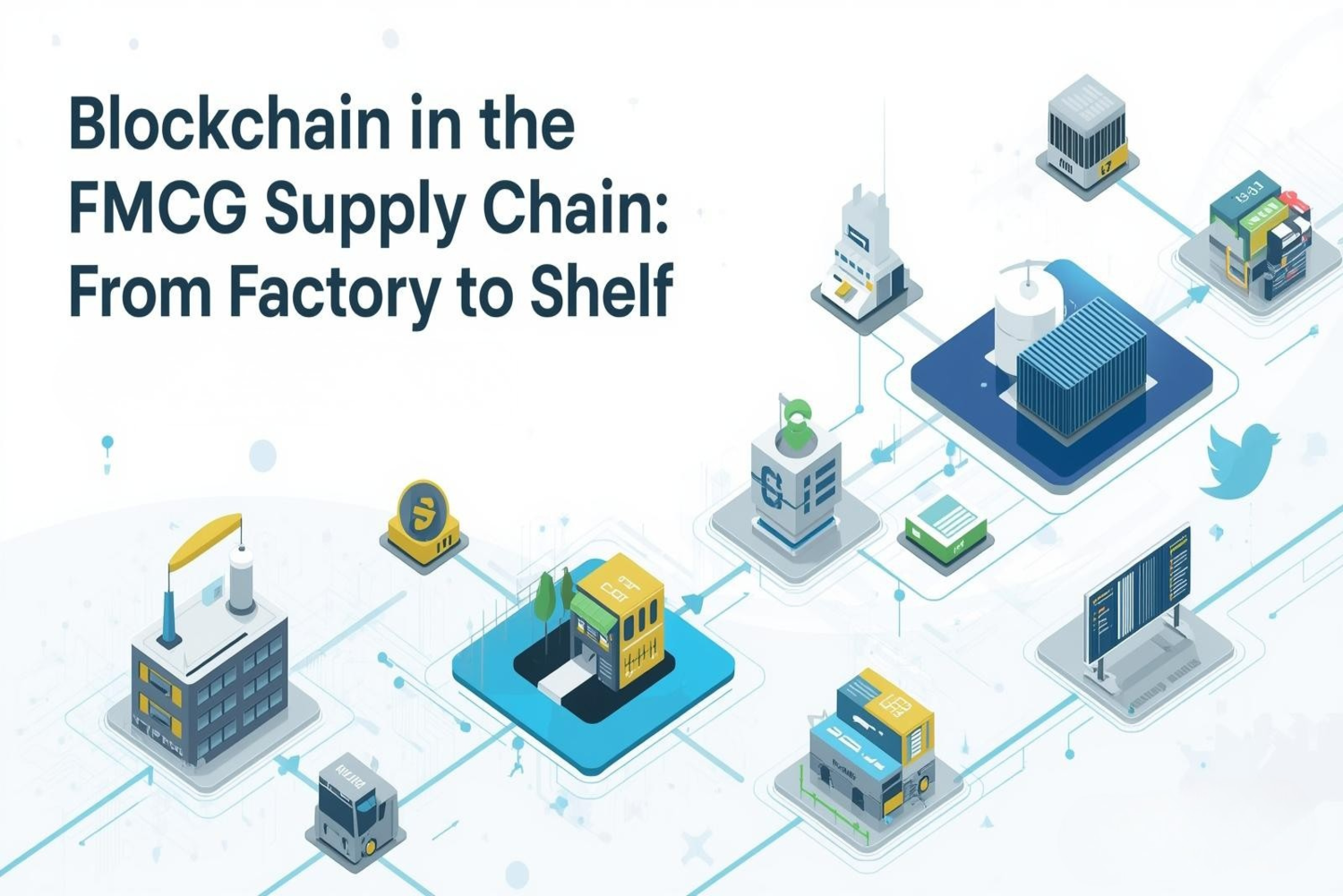
Blockchain introduces a unified, tamper-proof record for every batch. Once information is added – such as movement, inspection, or storage – it remains permanent. No edits. No overwritten entries. The system operates like a continuously expanding journal, ideal for managing fast moving consumer goods that require consistent quality from origin to retail.
Each batch of Kuber products passes through sorting, cleaning, processing, and packaging before distribution. Every transition generates an automated digital entry. When the batch shifts between regions or distribution hubs, the blockchain record updates again.
By the time products reach shelves in regions such as Europe, a simple QR scan reveals the complete journey—origin, handling, transit data, and inspection of checkpoints. Authenticity becomes verifiable throughout the chain.
To understand more about the company’s production strength and category expertise, explore its manufacturing ecosystem.
Advantages for an International FMCG Manufacturing Company
Blockchain drives measurable improvements across operational and quality-control touchpoints:
- Real-time stock adjustments
- Reduced manual errors
- Faster quality checks and early issue detection
- Streamlined audits with verified records
- Transparent documentation supporting responsible sourcing
These strengths help maintain reliability across international shipments of fast moving consumer goods, particularly within advanced export networks. Additional insights into these global routes can be found within the company’s export infrastructure.
Blockchain and Global FMCG Operations
Operating across diverse regulatory environments demands consistency, accuracy, and transparency. Kuber Group maintains these standards across more than 50 countries, supported by a blockchain system that unifies data across regions. This ensures reliability for fast moving consumer goods, regardless of market-specific logistics requirements.
More context on the organisation’s values, expansion, and leadership vision can be explored in its corporate profile.
FAQs
What role does blockchain play in the fast moving consumer goods supply chain?
Blockchain creates a permanent, traceable record of every step in the movement of fast moving consumer goods, improving oversight from production to retail.
How does blockchain support a global fmcg manufacturing company?
It enhances traceability, reduces errors, strengthens transparency, and improves operational precision across regions—benefiting an international fmcg manufacturing company with multi-country operations.
Can shoppers verify authenticity through blockchain?
Yes. QR codes on fast moving consumer goods provide access to verified product history.
Is blockchain suitable for large-scale fmcg manufacturing companies?
Yes. Blockchain supports international logistics networks and adapts to the scale required by a major fmcg manufacturing company.
Does blockchain improve efficiency in fast moving consumer goods supply chains?
Yes. Blockchain supports accurate shipments, smoother inventory movement, and reduced disruptions across supply chains handling fast moving consumer goods.
Can blockchain highlight ethical sourcing practices?
Yes. Timestamped entries provide transparent sourcing and handling information for fast moving consumer goods.
Strengthening FMCG Supply Chains with Transparency
Kuber Group continues enhancing its supply chain with technologies that reinforce clarity, authenticity, and global reliability. With blockchain integration, fast moving consumer goods move through a secure, transparent, and digitally verified path—from origin to shelf—strengthening trust in the reputation of an established fmcg manufacturing company.
For business enquiries or partnership opportunities, visit the Contact Us page.